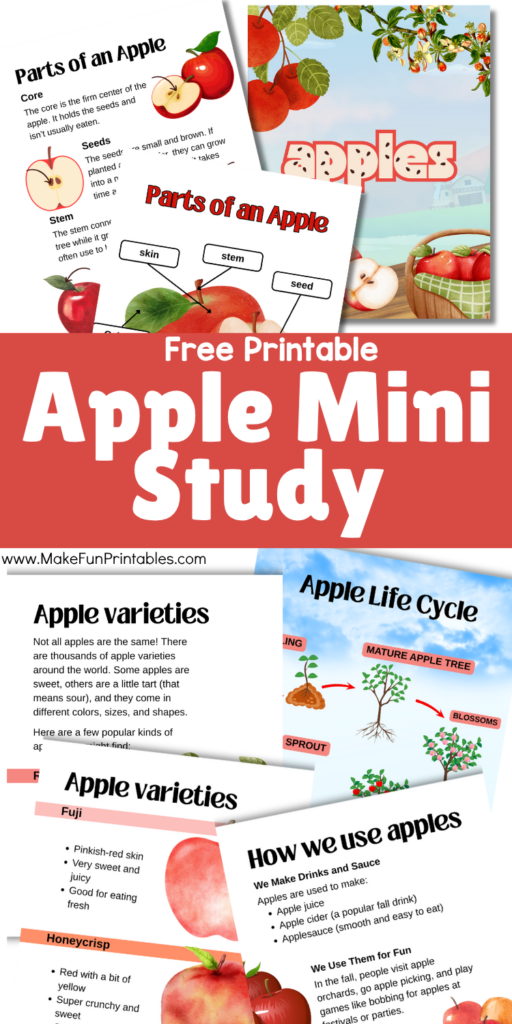
Apples work really well for a simple fall science study because children can see, touch, cut open, and taste the thing they’re learning about. This free apple unit study takes preschool and kindergarten children from the parts of an apple through the apple life cycle, apple trees, different varieties, and a few interesting facts about how apples grow.
Most of the information pages are meant to be read together. Preschoolers don’t need to read the text independently or remember every fact. I’d use the unit over several short lessons, add a real apple whenever it makes sense, and use the labeling pages and quiz to revisit what you’ve learned.
Explore the parts of an apple
Start with an apple you can cut open.
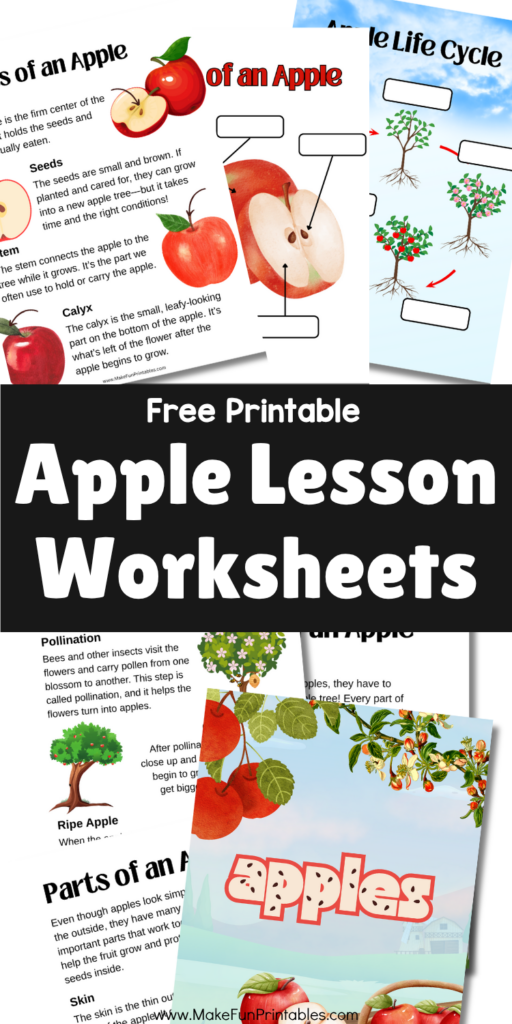
Children learn about the skin, flesh, core, seeds, stem, and calyx, then have a labeling activity to complete. Looking at a real apple first makes the vocabulary much easier to understand.
You can keep this lesson very simple. Cut the apple, find the different parts, talk about what you see, then eat it when you’re finished.
From there, the unit moves out to the whole apple tree. Children learn about the roots, trunk, branches, leaves, blossoms, and fruit, along with the job each part does.
Follow the apple life cycle
The apple life cycle gets a closer look, starting with a seed and following the tree as it grows.
Children learn about germination, the young sapling, a mature apple tree, blossoms, pollination, growing fruit, and finally a ripe apple with new seeds inside.
The pollination pages are a nice place to talk about why those spring blossoms matter. Bees and other insects move pollen between the flowers, helping the blossoms develop into apples.
After reading through the stages, children can use the unlabeled life cycle page to see which ones they remember. Younger children can tell you the answers while you fill them in together.
If you want to compare two different plant life cycles during your fall lessons, the Pumpkin Life Cycle Worksheets are an easy one to add next.
Learn more about apples
There is more to explore once children understand how an apple grows.
The unit introduces several familiar apple varieties, including Red Delicious, Granny Smith, Gala, Fuji, and Honeycrisp. Children can read about some of the differences in color, texture, and taste.
If you have two or three kinds of apples at home, turn this part into a quick tasting activity. Slice them up and compare which are sweeter or more tart, how crunchy they are, and how the colors differ.
Children also learn a little about where apples grow, ways we use them, and some apple facts. One of the more interesting ideas is that an apple tree grown from seed won’t necessarily produce apples like the fruit the seed came from.
For a hands-on math activity that keeps the apple theme going, use the Apple Counting Playdough Mat alongside the unit study.
Try growing an apple seed
There are instructions for starting your own apple tree from seed too.
The seeds first need a period of cold stratification in the refrigerator before planting. After that, they can be planted in soil and kept somewhere sunny while you wait to see if they sprout.
Save several seeds rather than just one since not every seed will grow.
This is definitely a patience project. Apple trees grown from seed can take years before producing fruit, so for young children I’d focus on watching for that first little sprout and caring for the plant as it grows.
Add an apple activity to the lesson
There is also a simple cinnamon apple recipe that can be used as part of your apple study.
You don’t need to add every extra activity, though. The unit already gives you plenty to work through, so I’d choose the hands-on pieces that suit your child and the time you have.
For preschool especially, a real apple, a labeling page, and one short information section can easily be enough for one day.
Make the activity pages reusable
Most of the unit simply needs printing. If you’d like to reuse the labeling pages or apple quiz, slide them into dry erase pockets and use fine tip dry erase markers.
That works particularly well if you’re using the unit with more than one child or want to bring it out again next fall.
Check what your child remembers
The apple quiz at the end covers some of the main ideas from the study, including apple parts, colors, blossoms, pollination, varieties, and seeds.
An answer page is included.
I wouldn’t treat the quiz like a formal test for preschoolers. Read the questions aloud and let them answer verbally or point to an answer. Kindergarten children who are ready can work through more of it independently.
The goal is simply to revisit the information you’ve already covered.
Using the apple unit study at home
There is enough here for several short lessons, and that’s how I’d use it.
Start with the apple itself and its parts. Save the apple tree and life cycle for another day. Apple varieties, growing regions, fun facts, the seed experiment, and quiz can be added gradually instead of trying to fit everything into one long lesson.
That gives you room to follow your child’s interest too. If the life cycle catches their attention, spend more time there. If tasting different apples is the favorite part, lean into that instead.
Get the free apple unit study
Grab the free apple unit study below for a simple way to explore apple parts, apple trees, the life cycle, varieties, and more with preschool or kindergarten children.