Cat and hat. Dog and frog. Bee and tree. Children don’t need to recognize written words to start learning about rhymes. They just need to listen for words that sound the same at the end.
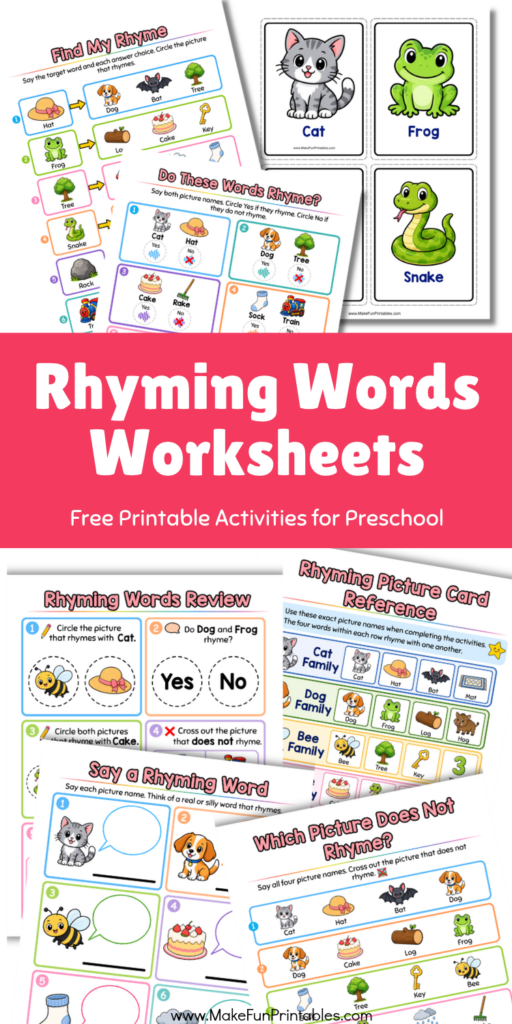
My rhyming words worksheets for preschool help children recognize matching sounds through colorful picture activities. They’ll listen to word pairs, match pictures that rhyme, find words that don’t belong, sort rhyming words into groups, and even make up their own silly rhymes.
Along with the worksheets, there are illustrated rhyming picture cards and reusable activity mats for hands-on practice. Everything is designed around listening and recognizing sounds, so children don’t need to read independently.
Learning to hear words that rhyme
Before working on the activities, introduce a few simple rhyming pairs.
Start with cat and hat. Say both words slowly, emphasizing the matching ending sounds. Then try cat and dog so your child can hear the difference between words that rhyme and words that don’t.
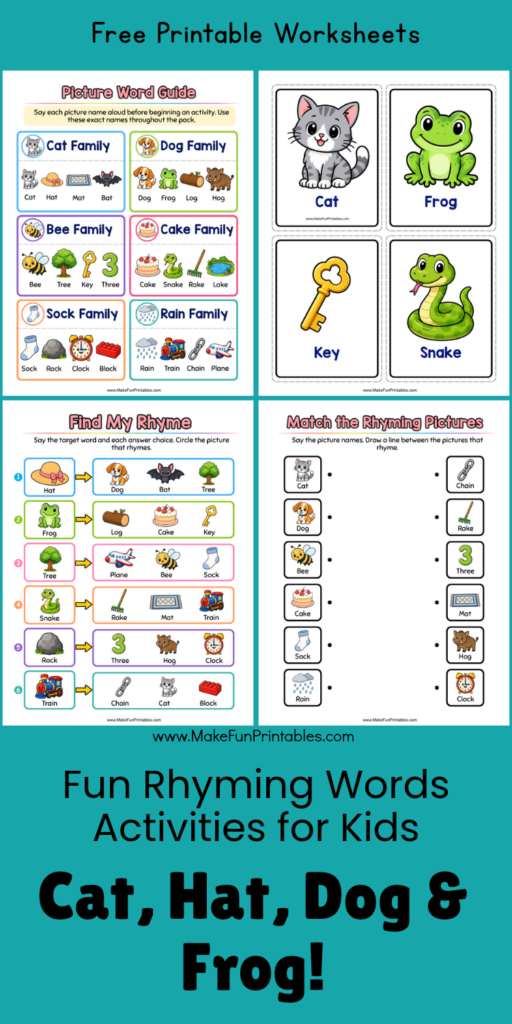
The printable uses six groups of rhyming words:
- Cat: Hat, mat, bat
- Dog: Frog, log, hog
- Bee: Tree, key, three
- Cake: Snake, rake, lake
- Sock: Rock, clock, block
- Rain: Train, chain, plane
Each group has matching pictures, making it easier to introduce the words without asking children to read them.
There’s also a picture word guide showing the intended name for every illustration. Go through the pictures together before starting so your child knows which words to listen for.
Find and match the rhyming pictures
Once children can hear the similarity between a few word pairs, they can start finding rhymes independently.
The worksheets offer different ways to practice listening and matching sounds:
- Do these words rhyme? Look at two pictures, say their names, and circle yes or no.
- Match the rhyming pictures: Draw lines connecting words like cat and mat or dog and hog.
- Find my rhyme: Choose the picture that rhymes with a target word from three possible answers.
- Which two pictures rhyme? Look at three pictures and circle the two with matching ending sounds.
- Find both rhymes: Choose two pictures that rhyme with the same target word.
- Cut and paste rhyming words: Sort pictures into the correct rhyming groups and complete missing word pairs.
Read the picture names aloud while your child listens for the rhymes. Saying each word clearly is especially helpful when they’re learning to recognize the ending sounds.
For younger preschoolers, begin with just two pictures at a time. Once they’re comfortable matching simple pairs, move on to activities with three or four choices.
Which word doesn’t belong?
Some activities work in the opposite direction. Instead of finding matching rhymes, children need to spot the word that sounds different.
For example, show your child four pictures:
Cat, hat, bat, dog.
Say each word aloud and ask which one doesn’t belong.
The worksheets include picture rows where children cross out the word that doesn’t rhyme with the others. There’s also a sorting activity where they separate rhyming pairs from pairs that don’t rhyme.
This gives children another way to practice listening carefully to the sounds at the ends of words.
Rhyming picture cards for hands-on games
One of the most useful parts of this printable is the set of 24 rhyming picture cards, covering all six word families.
Cut the cards apart and use them for matching, sorting, or simple games. You don’t have to use all 24 cards at once.
Start with four or six matching pairs spread across the table. Choose one card, say the word aloud, and ask your child to find its rhyme.
The printable also includes reusable activity mats for different games:
Find my rhyme: Place a picture card at the top, add three possible answers, and let your child choose the rhyming match.
Rhyming or not rhyming: Compare two cards and sort them according to whether their names rhyme.
Rhyme family sorting: Choose a target word and find three other pictures from the same rhyming family.
You can also turn the cards face down for a rhyming memory game, where children turn over two pictures and try to find matching sounds.
The cards are useful for children who prefer moving pictures around rather than completing pencil activities. They can point to or select an answer without needing to say the word themselves.
Rhyming riddles, silly words and drawing activities
Rhyming doesn’t always have to involve real words.
If your child says “zat” when asked for a word that rhymes with cat, that’s fine! The important part is that they’ve recognized and repeated the matching ending sound.
The worksheets include activities where children think of their own rhyming words, answer picture riddles, and draw something that rhymes with a given word.
For example, a riddle might ask:
“I rhyme with cat. You wear me on your head.”
Children listen to the clue and circle the picture of a hat.
For the drawing activities, help your child think of a rhyming word first. Then let them draw a picture to represent it.
The pack also includes a mixed review activity that brings together matching, identifying rhymes, finding the odd word, and creating a rhyme.
Easy ways to practice rhyming at home
Rhyming works well as a short activity during your preschool lessons. There’s no need to complete several worksheets in one sitting.
Start with listening to rhyming pairs, then introduce matching activities before moving on to sorting and creating rhymes.
You can practice away from the worksheets, too. Try asking for a word that rhymes with something you see around the house, or listen for matching sounds while reading a favorite story.
For preparation, print the activity pages you want to use. Most worksheets need only a pencil or crayons, while the cut and paste activities require child-safe scissors and glue sticks. These are affiliate links.
Cut the picture cards apart before using the reusable mats. Keep the cards together in a small bag or envelope so they’re ready for another activity.
Once your child is comfortable listening for rhymes, you can introduce other early reading activities, such as my alphabet beginning sounds worksheets. Children who are ready to begin blending short words can also try the CVC Roll and Read printable.
Free printable rhyming words worksheets for preschool
Help your preschooler listen for matching sounds with rhyming picture activities, cut and paste worksheets, word family sorting games, and reusable picture cards.
Download the free rhyming words worksheets for preschool below and start with a few simple word pairs before exploring the rest of the activities.


