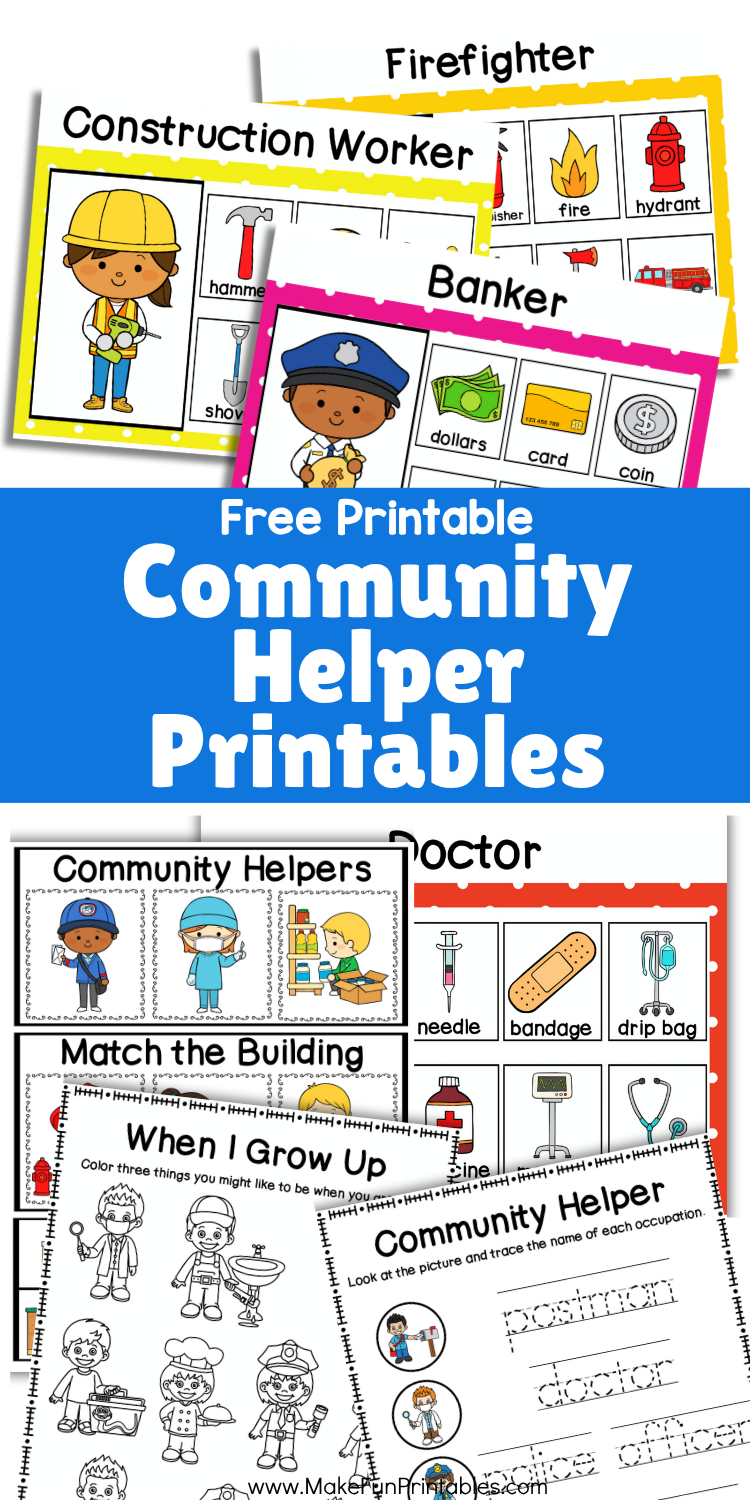
Preschool teachers and homeschool parents can use the printable community helpers worksheets as a way to combine early literacy, handwriting, phonics, and fine motor practice in one familiar theme. The six page pack is designed for preschool, pre k, and early kindergarten learners.
Each activity offers simple and focused skill practice through tracing, coloring, matching, beginning sounds, cut and paste sorting, and maze work. Pages work well for morning work, homeschool lessons, literacy centers, small groups, occupational therapy support, or quiet table time.
The No-prep community helpers worksheets make lesson setup easy. Print the pages you need, gather a few basic supplies, and begin learning about familiar workers such as firefighters, police officers, doctors, teachers, mail carriers, dentists, veterinarians, sanitation workers, and bus drivers.
Teaching experience and why I create worksheets like this
As a homeschooling mom of 4, including one autistic child, I have created many printable packs with structured learning activities. Clear directions and predictable page layouts can help young children understand what to do without feeling overwhelmed.
Years of homeschooling have taught me that preschool activities do not need to be complicated to be useful. Short and intentional learning tasks often provide more meaningful practice than busy pages filled with too many directions.
Every worksheet in the pack focuses on skills young learners are actively developing. Tracing, coloring, cutting, matching, and sound recognition give children several ways to work with community helper vocabulary.
Learning objectives for community helpers worksheets
The free printable community helpers worksheets support early learning through familiar pictures and simple directions.
Children can practice the following skills:
- Fine motor control: Tracing words, coloring pictures, drawing lines, cutting cards, gluing pieces, and following a maze strengthen controlled hand movements.
- Letter recognition: Children look at letter choices and identify the letter connected to the first sound in each community helper name.
- Beginning sounds: Learners say each community helper name and listen for the opening sound.
- Phonemic awareness: Children isolate the first sound in spoken words before connecting it with a printed letter.
- Pencil grip: Short tracing and maze activities provide manageable opportunities to practice holding and moving a pencil.
- Handwriting: Children trace community helper words before copying them onto handwriting lines.
- Cutting practice: Straight cutting lines help preschoolers build confidence with scissors.
- Bilateral coordination: One hand holds and turns the paper while the other hand controls the scissors.
- Visual matching: Learners connect each community helper with the correct work tool.
- Vocabulary development: Children learn job names and recognize items connected with each role.
What is included in the free printable community helpers worksheets for preschool
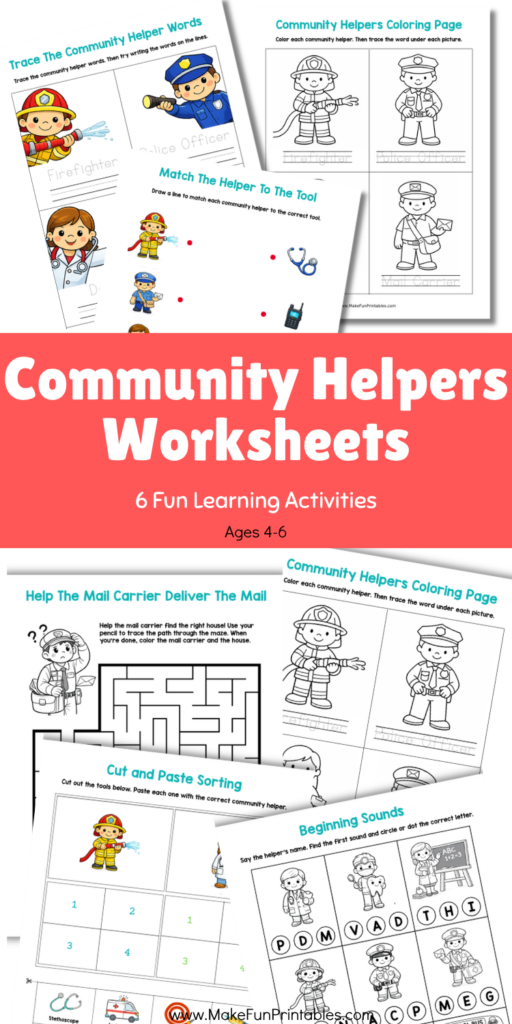
The download contains six printable community helpers worksheet pages with literacy, phonics, handwriting, matching, coloring, and fine motor activities.
Page 1: Community helpers coloring and tracing
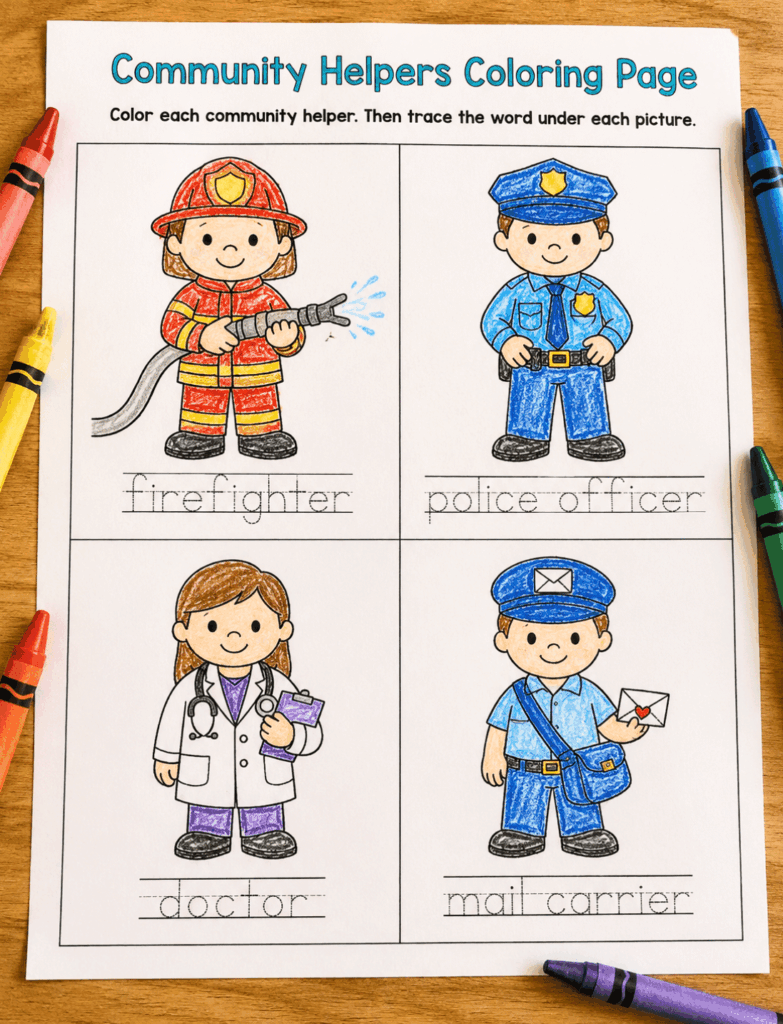
Children color pictures of a firefighter, police officer, doctor, and mail carrier. Dotted words under each picture provide early tracing practice.
Page 2: Community helper word tracing
Learners trace the words firefighter, police officer, doctor, and mail carrier. Handwriting lines under each word allow children to try writing the job names independently.
Page 3: Match the helper to the tool
Children draw lines to connect community helpers with the correct tools. The matching activity includes a firefighter, mail carrier, doctor, and police officer.
Page 4: Community helper cut and paste sorting
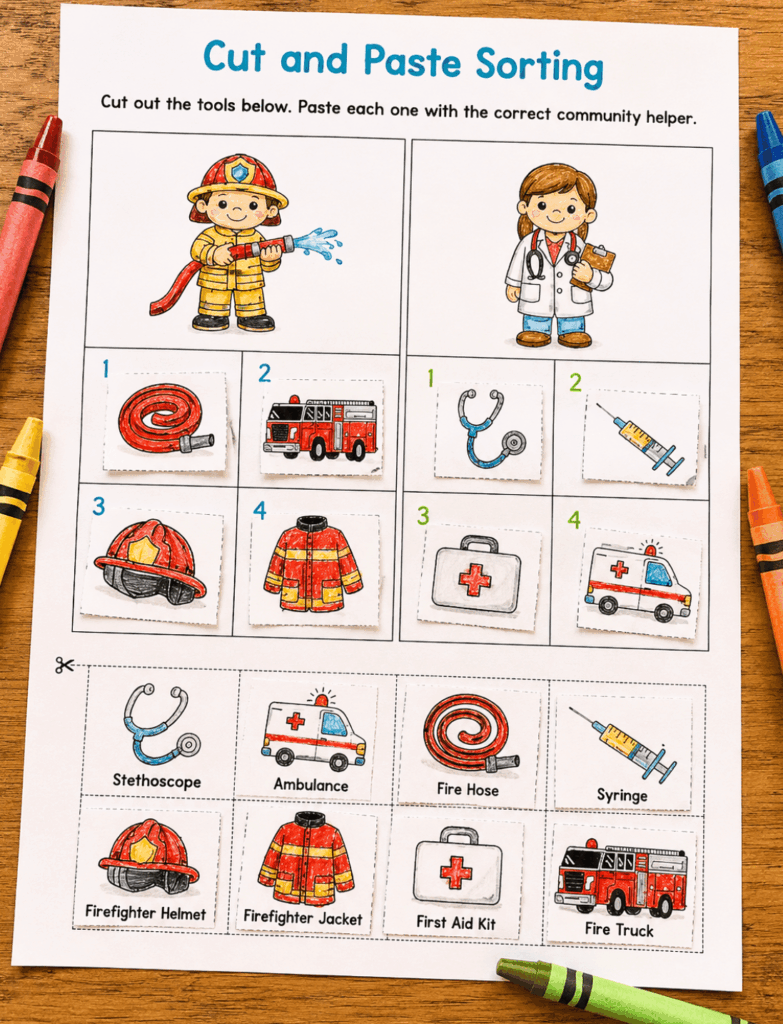
Children cut out eight picture cards and sort them under either the firefighter or doctor. The cut and paste worksheet builds fine motor skills while reinforcing the purpose of common work tools.
Page 5: Community helper beginning sounds
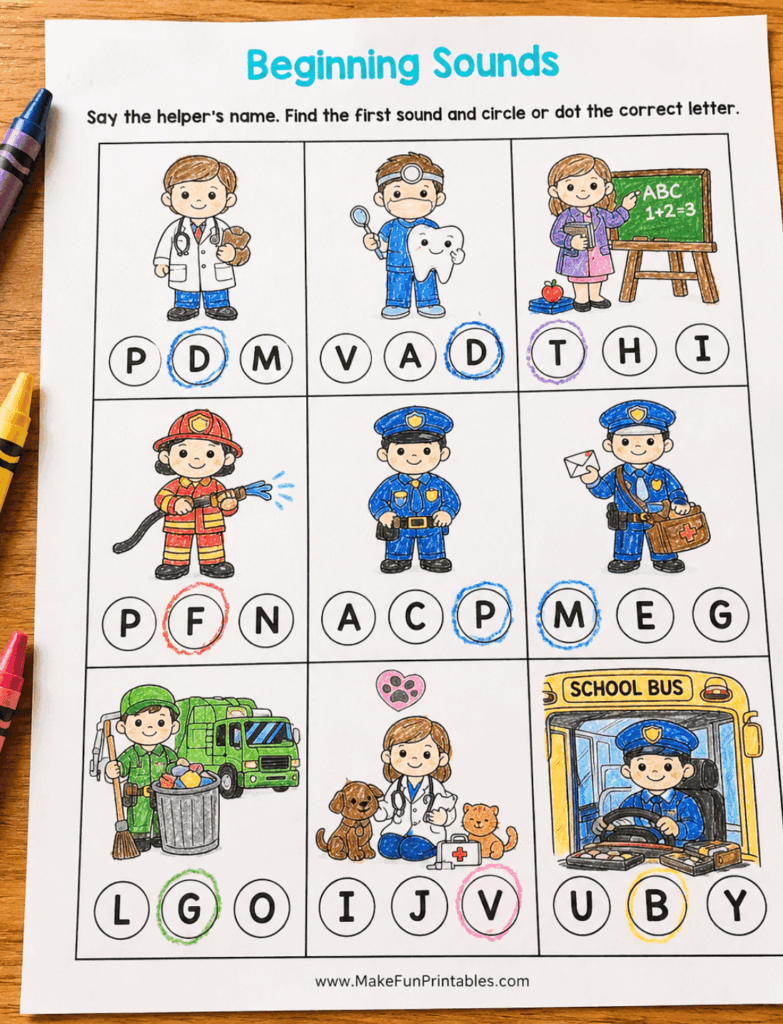
Children name each pictured helper and select the correct beginning letter. Nine community helper pictures provide focused phonics and letter recognition practice.
Page 6: Mail carrier maze
Children help the mail carrier reach the correct house by tracing a path through the maze. The maze worksheet combines pencil control and visual tracking with community helper themed coloring.
Best age for community helpers worksheets
The printable pack is best suited for preschool and pre k children ages 3 to 5. Younger children may need help with cutting, beginning sounds, or copying longer words.
Kindergarten learners can use the pages for handwriting and phonics review during community helper lessons, literacy centers, or fine motor practice.
Not every child needs to complete every page in one sitting. Short and positive learning sessions can help children build confidence without creating unnecessary pressure.
Easy preparation for community helpers worksheets
The low prep worksheet pack requires only basic printing and classroom supplies.
- Download the printable PDF.
- Print all six pages or select individual activities.
- Use regular printer paper for tracing, coloring, matching, and maze work.
- Print the cut and paste page on one side of the paper.
- Place reusable pages inside dry erase pockets when desired.
- Keep the cutting page on regular paper for scissors and glue practice.
- Model one example before children begin working independently.
Coloring and tracing pages can be used immediately. No-prep pages are especially helpful for busy homeschool mornings, classroom centers, and last minute lesson planning.
Suggested materials
Only a few supplies are needed for easy community helper worksheet practice.
- Use pencils for tracing and maze work and Crayola crayons for coloring. Basic writing and coloring tools are enough for most pages in the pack.
- The sorting page works best with child safe scissors and Elmer’s glue sticks. Simple cutting and gluing supplies allow children to complete the activity with minimal setup.
- Children who are still developing hand strength may benefit from spring loaded safety scissors. Supportive scissors can reduce frustration while still allowing children to practice the cutting movement.
- Use dot markers to mark answers on the beginning sounds worksheet. Dotting provides an alternative response method for children who find circling small letters difficult.
- Place tracing and maze pages inside dry erase pockets and use fine tip dry erase markers for repeated practice. Reusable worksheet pages work well in literacy centers, homeschool workboxes, and therapy sessions.
More community helpers printables for preschool
Continue building the same topic with closely related community helper activities!
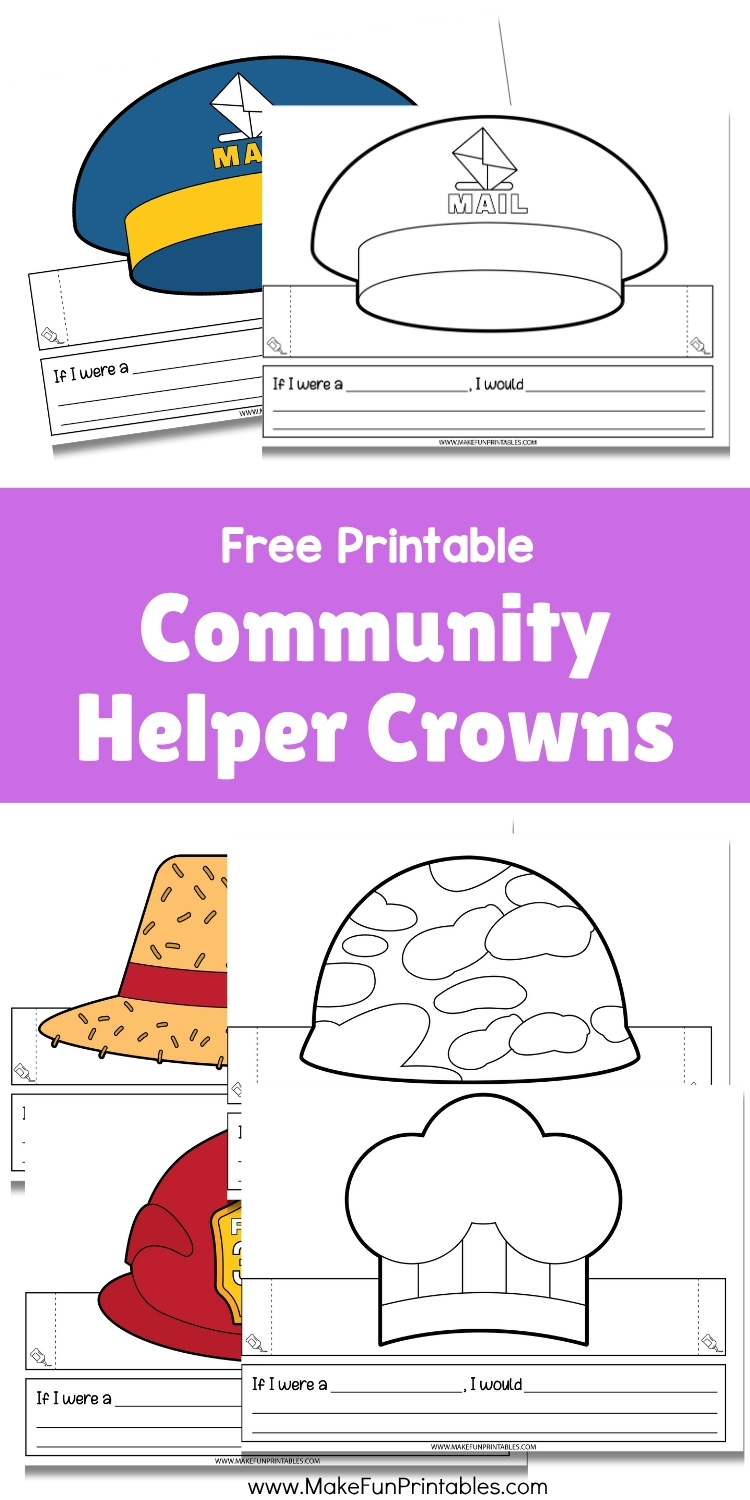
- Add creative role play with the free community helper paper hats printable. Printable hats encourage pretend play after children learn about each job.
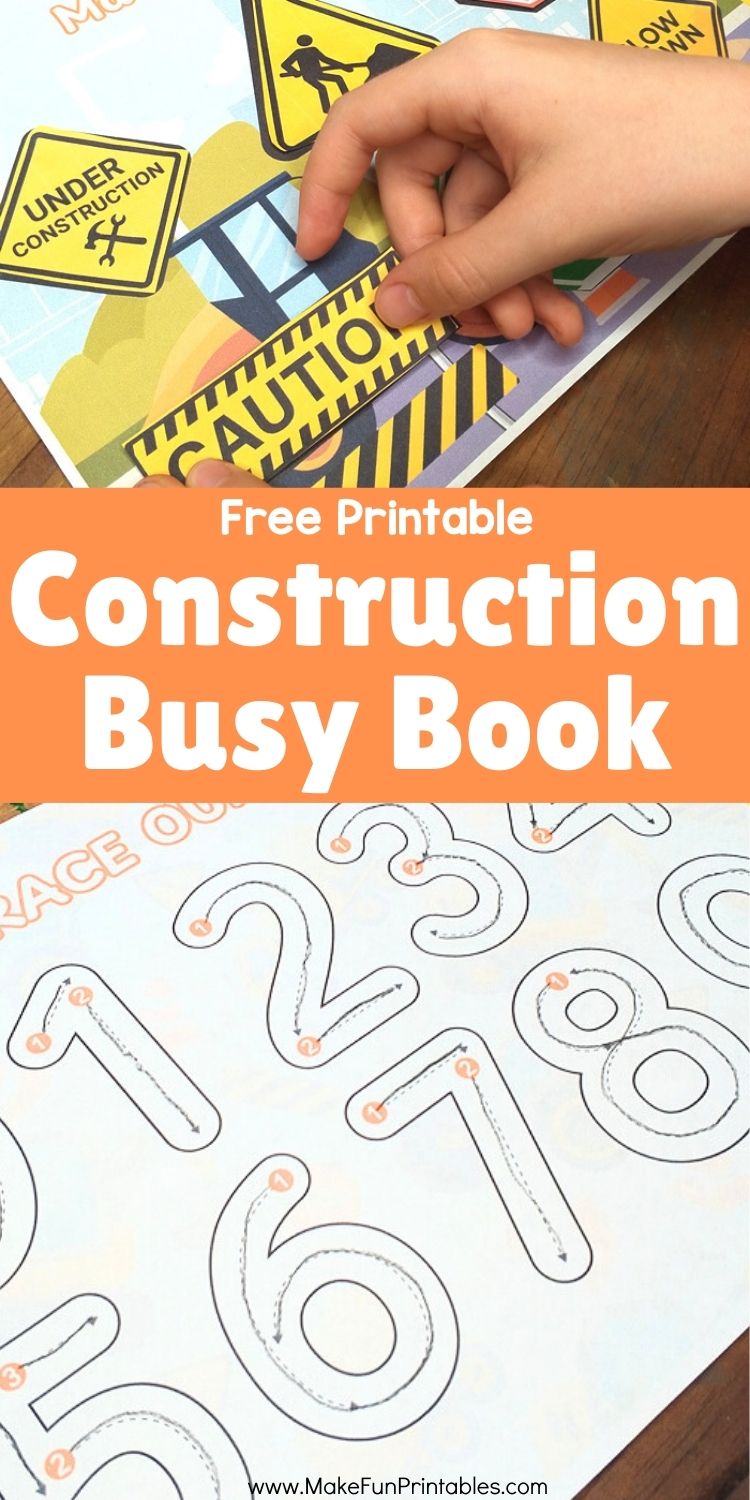
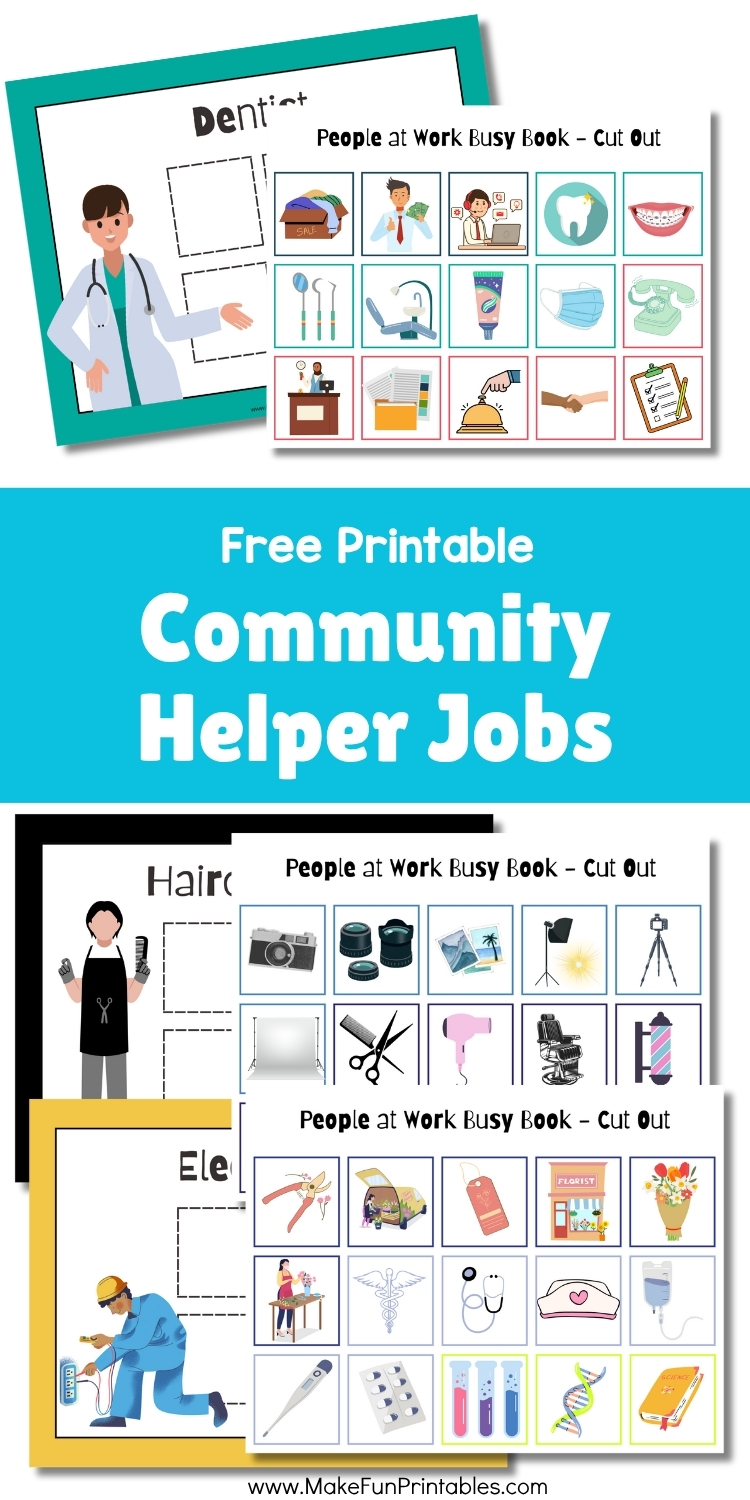
- Use the community helper jobs busy book for more matching and interactive learning. Busy book activities provide extended practice with people at work.
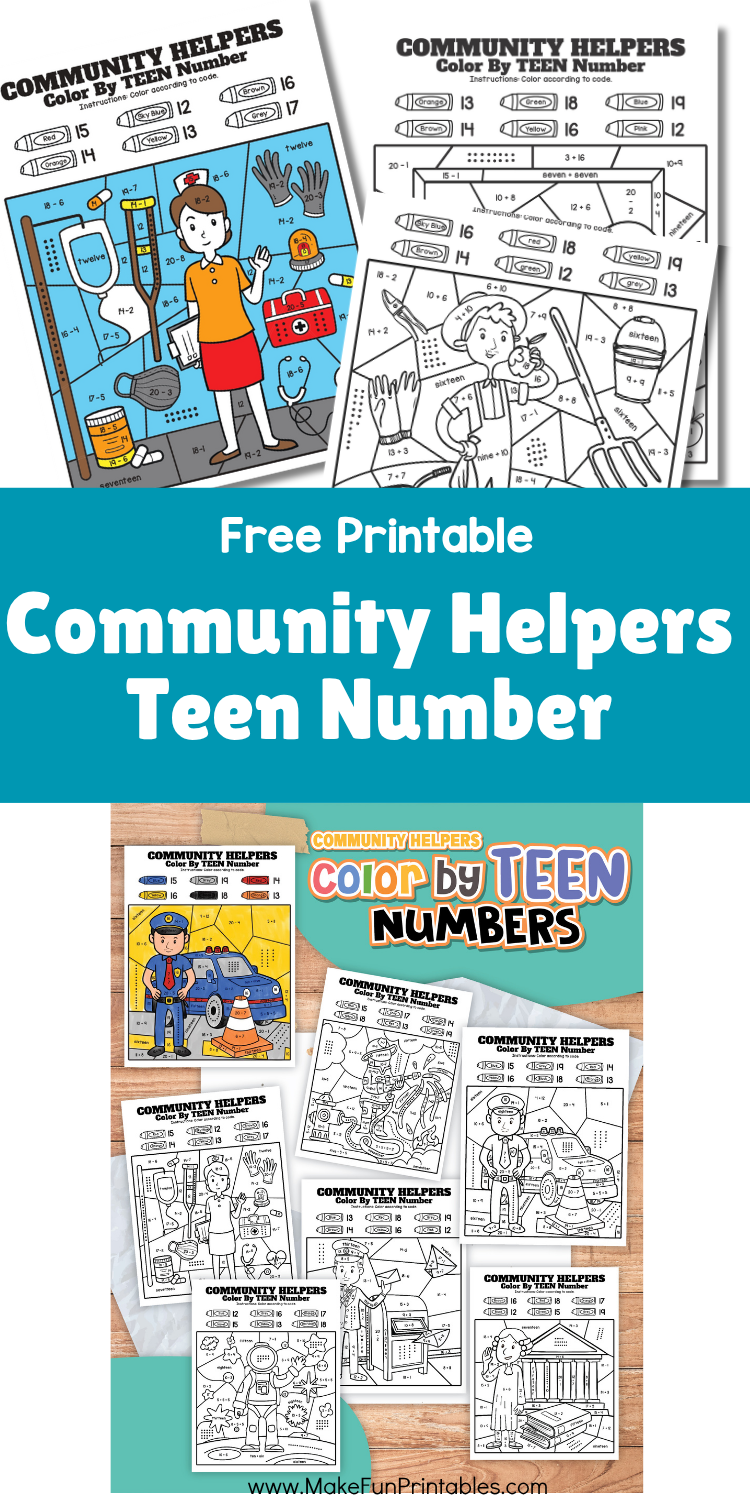
- Add early number practice with the community helpers color by teen number worksheets. The number worksheets keep the same theme while moving into early math skills.
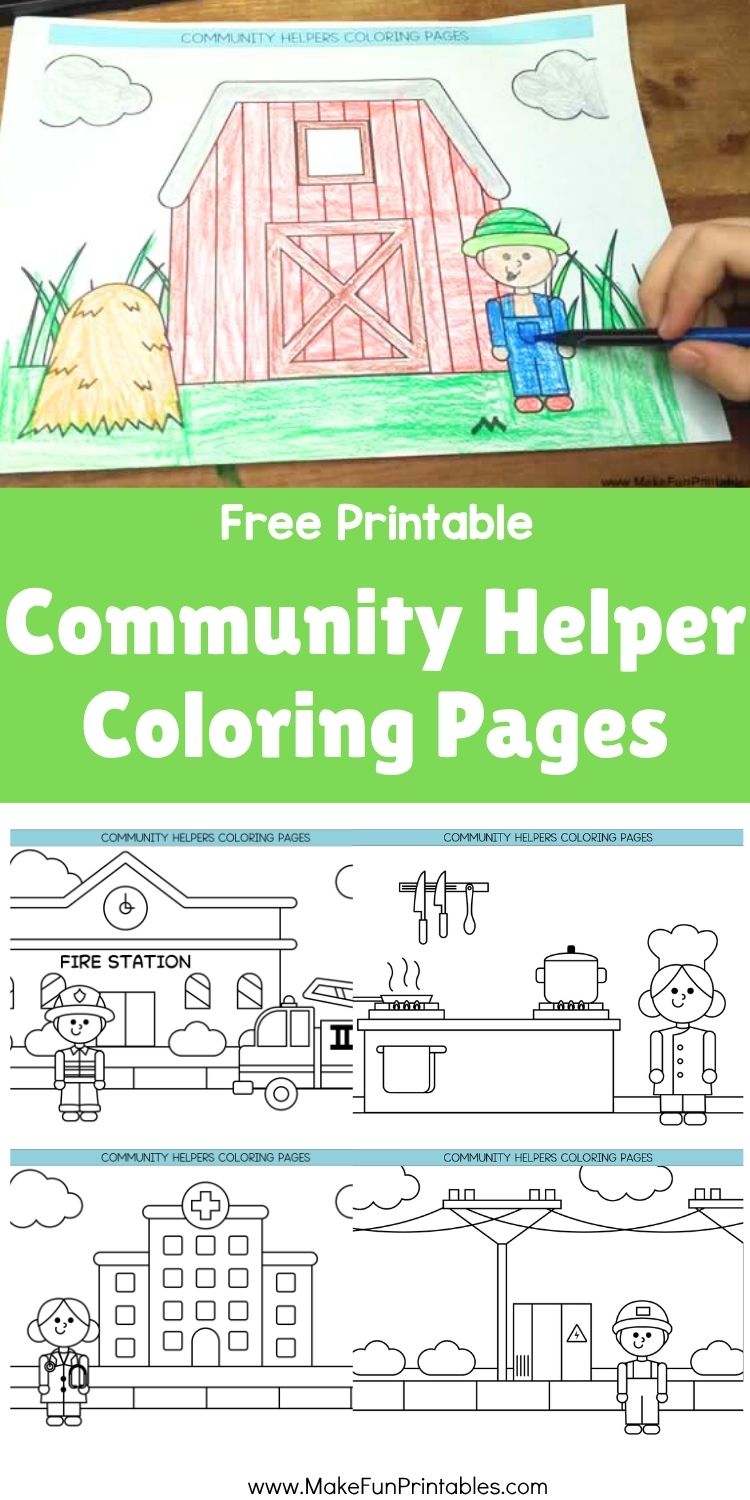
- Include extra art time with the community helper coloring pages. Coloring pages work well as quiet follow up activities after a lesson or read aloud.
Download the free printable community helpers worksheets for preschool
Choose one page for quick practice or use the complete pack throughout a community helpers theme. The free six page printable gives preschool children meaningful practice with tracing, coloring, handwriting, phonics, matching, cut and paste sorting, and pencil control.